

December 5, 2025 2:13pm
GLI brings together GLIDE Milwaukee attendees to discuss next steps for Permanent Supportive Housing in Louisville
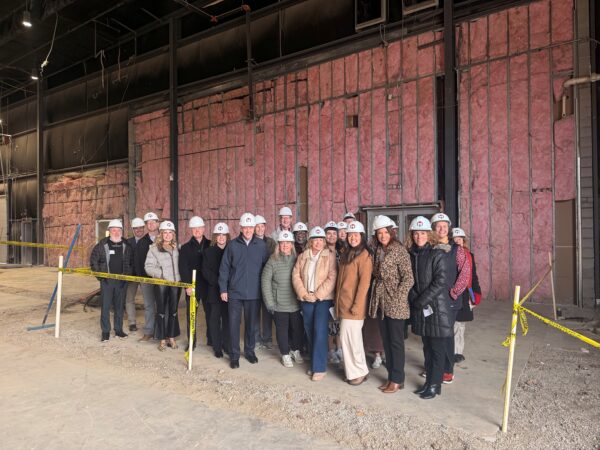
This morning, Greater Louisville Inc. brought together more than 40 business leaders who attended the GLIDE Milwaukee trip in October to continue the conversation and increase business community engagement in Louisville’s Permanent Supportive Housing Strategy. The event featured presentations from: Jon Copley, Chair of Volunteers of America Mid-States Board of Directors, Jennifer Hancock, President and CEO of Volunteers of America Mid-States, Natalie Harris, Executive Director for the Coalition for the Homeless, Marilyn Harris, Senior Housing Advisor for Louisville Metro Government, and Dr. Mariya Leyderman, Executive Director of Behavioral Health for Louisville Metro Government, and concluded with an exclusive tour of Louisville’s Community Care Campus.
Louisville’s strategy centers on Permanent Supportive Housing, a model that goes beyond providing a roof over someone’s head. This model has been widely successful in other cities, including Milwaukee, where it has helped decrease the overall homeless population by 46.3% in five years and saved taxpayers over $30 million since it was launched in 2015. Currently, Louisville has approximately 1,700 people experiencing homelessness on any given night, with 600 sleeping on the streets.
Marilyn Harris emphasized that Permanent Supportive Housing simply means each unit comes with critical services designed to help individuals rebuild their lives. She explained that this strategy would create an approximately $16,400 per person savings for health care systems alone. Permanent Supportive Housing tackles homelessness holistically, recognizing that survival on the streets creates immense psychological strain. By providing stable housing, individuals can focus on critical life improvements like addressing mental health, substance use, and workforce development.
During the conversation, stakeholders highlighted that this initiative is not only about helping individuals – it’s about strengthening the entire community. By providing comprehensive support, the program helps individuals become contributing members of society, reducing strain on healthcare and law enforcement systems, and increasing workforce participation.
Hancock shared how the Community Care Campus, spearheaded by VOA, is one major resource and part of this strategy, bringing together multiple partners to create a comprehensive support ecosystem. The first phase of the campus is set to open in spring 2026. To date, VOA has raised more than $5.89 million for the campus, including funding from the city and state, but still needs to raise an additional $2.8 million to fully actualize the campus. Through the generosity of an anonymous donor, Volunteers of America is currently offering a $500,000 grant match until March 31 on any donations to fund the Community Care Campus. Businesses and individuals are encouraged to donate to have their contribution matched.
Key services and programs of the Community Care Campus include:
- Unity House: 80 units of affordable housing, with 20 units specifically designed for those with mental health and substance use challenges
- Medical services through Family Health Centers
- On-site pharmacy and primary care
- YMCA transitional housing for young adults aging out of foster care
- Collaborative spaces for additional support services
To learn more about the GLIDE Milwaukee trip, click here.